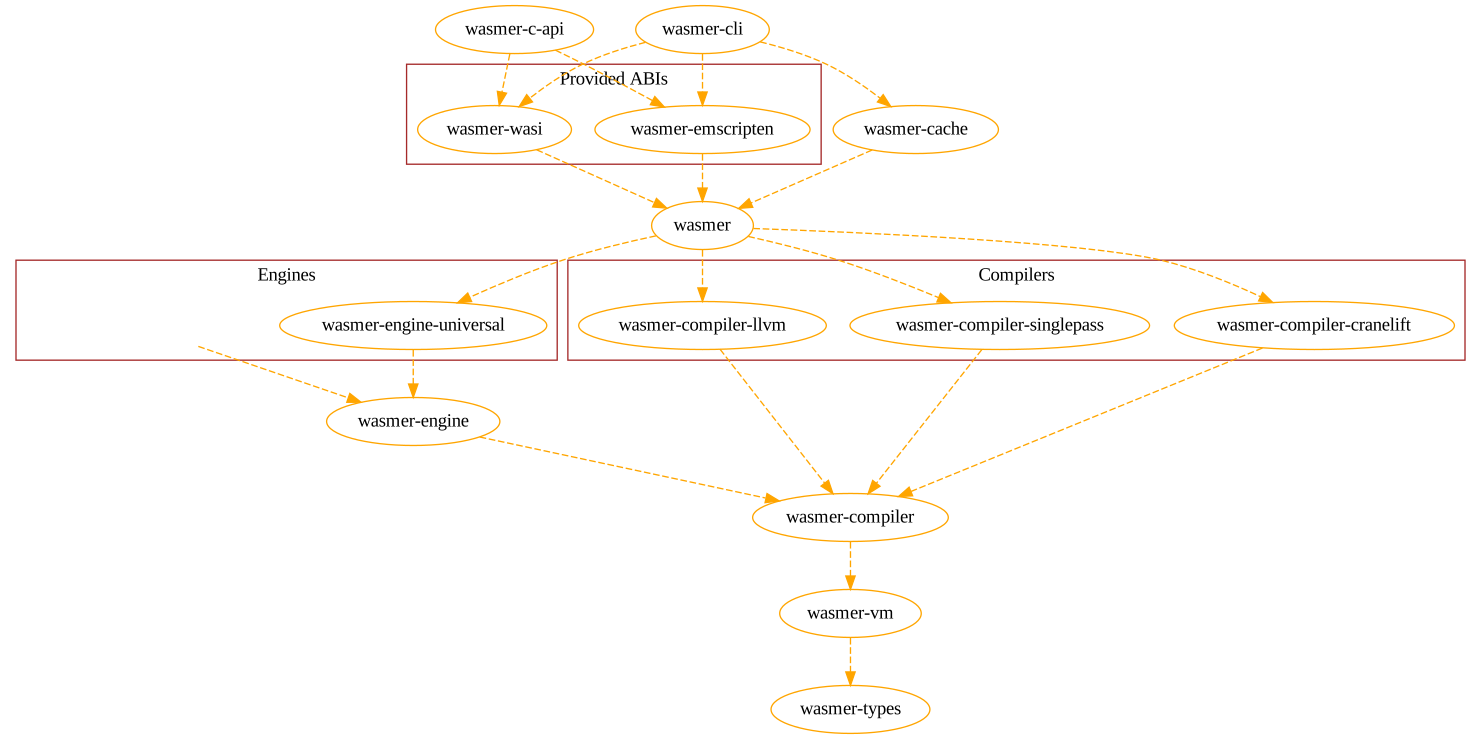
#![doc( html_logo_url = "https://github.com/wasmerio.png?size=200", html_favicon_url = "https://wasmer.io/images/icons/favicon-32x32.png" )] #![deny( missing_docs, trivial_numeric_casts, unused_extern_crates, broken_intra_doc_links )] #![warn(unused_import_braces)] #![cfg_attr( feature = "cargo-clippy", allow(clippy::new_without_default, vtable_address_comparisons) )] #![cfg_attr( feature = "cargo-clippy", warn( clippy::float_arithmetic, clippy::mut_mut, clippy::nonminimal_bool, clippy::option_map_unwrap_or, clippy::option_map_unwrap_or_else, clippy::print_stdout, clippy::unicode_not_nfc, clippy::use_self ) )] //! This crate contains the `wasmer` API. The `wasmer` API facilitates the efficient, //! sandboxed execution of [WebAssembly (Wasm)][wasm] modules. //! //! Here's an example of the `wasmer` API in action: //! ``` //! use wasmer::{Store, Module, Instance, Value, imports}; //! //! fn main() -> anyhow::Result<()> { //! let module_wat = r#" //! (module //! (type $t0 (func (param i32) (result i32))) //! (func $add_one (export "add_one") (type $t0) (param $p0 i32) (result i32) //! get_local $p0 //! i32.const 1 //! i32.add)) //! "#; //! //! let store = Store::default(); //! let module = Module::new(&store, &module_wat)?; //! // The module doesn't import anything, so we create an empty import object. //! let import_object = imports! {}; //! let instance = Instance::new(&module, &import_object)?; //! //! let add_one = instance.exports.get_function("add_one")?; //! let result = add_one.call(&[Value::I32(42)])?; //! assert_eq!(result[0], Value::I32(43)); //! //! Ok(()) //! } //! ``` //! //! For more examples of using the `wasmer` API, check out the //! [wasmer examples][wasmer-examples]. //! //! --------- //! //! # Table of Contents //! //! - [Wasm Primitives](#wasm-primitives) //! - [Externs](#externs) //! - [Functions](#functions) //! - [Memories](#memories) //! - [Globals](#globals) //! - [Tables](#tables) //! - [Project Layout](#project-layout) //! - [Engines](#engines) //! - [Compilers](#compilers) //! - [Features](#features) //! //! //! # Wasm Primitives //! In order to make use of the power of the `wasmer` API, it's important //! to understand the primitives around which the API is built. //! //! Wasm only deals with a small number of core data types, these data //! types can be found in the [`Value`] type. //! //! In addition to the core Wasm types, the core types of the API are //! referred to as "externs". //! //! ## Externs //! An [`Extern`] is a type that can be imported or exported from a Wasm //! module. //! //! To import an extern, simply give it a namespace and a name with the //! [`imports`] macro: //! //! ``` //! # use wasmer::{imports, Function, Memory, MemoryType, Store, ImportObject}; //! # fn imports_example(store: &Store) -> ImportObject { //! let memory = Memory::new(&store, MemoryType::new(1, None, false)).unwrap(); //! imports! { //! "env" => { //! "my_function" => Function::new_native(store, || println!("Hello")), //! "memory" => memory, //! } //! } //! # } //! ``` //! //! And to access an exported extern, see the [`Exports`] API, accessible //! from any instance via `instance.exports`: //! //! ``` //! # use wasmer::{imports, Instance, Function, Memory, NativeFunc}; //! # fn exports_example(instance: &Instance) -> anyhow::Result<()> { //! let memory = instance.exports.get_memory("memory")?; //! let memory: &Memory = instance.exports.get("some_other_memory")?; //! let add: NativeFunc<(i32, i32), i32> = instance.exports.get_native_function("add")?; //! let result = add.call(5, 37)?; //! assert_eq!(result, 42); //! # Ok(()) //! # } //! ``` //! //! These are the primary types that the `wasmer` API uses. //! //! ### Functions //! There are 2 types of functions in `wasmer`: //! 1. Wasm functions //! 2. Host functions //! //! A Wasm function is a function defined in a WebAssembly module that can //! only perform computation without side effects and call other functions. //! //! Wasm functions take 0 or more arguments and return 0 or more results. //! Wasm functions can only deal with the primitive types defined in //! [`Value`]. //! //! A Host function is any function implemented on the host, in this case in //! Rust. //! //! Host functions can optionally be created with an environment that //! implements [`WasmerEnv`]. This environment is useful for maintaining //! host state (for example the filesystem in WASI). //! //! Thus WebAssembly modules by themselves cannot do anything but computation //! on the core types in [`Value`]. In order to make them more useful we //! give them access to the outside world with [`imports`]. //! //! If you're looking for a sandboxed, POSIX-like environment to execute Wasm //! in, check out the [`wasmer-wasi`][wasmer-wasi] crate for our implementation of WASI, //! the WebAssembly System Interface. //! //! In the `wasmer` API we support functions which take their arguments and //! return their results dynamically, [`Function`], and functions which //! take their arguments and return their results statically, [`NativeFunc`]. //! //! ### Memories //! Memories store data. //! //! In most Wasm programs, nearly all data will live in a [`Memory`]. //! //! This data can be shared between the host and guest to allow for more //! interesting programs. //! //! ### Globals //! A [`Global`] is a type that may be either mutable or immutable, and //! contains one of the core Wasm types defined in [`Value`]. //! //! ### Tables //! A [`Table`] is an indexed list of items. //! //! //! ## Project Layout //! //! The Wasmer project is divided into a number of crates, below is a dependency //! graph with transitive dependencies removed. //! //!
//! //!
//! //! While this crate is the top level API, we also publish crates built //! on top of this API that you may be interested in using, including: //! //! - [wasmer-cache][] for caching compiled Wasm modules. //! - [wasmer-emscripten][] for running Wasm modules compiled to the //! Emscripten ABI. //! - [wasmer-wasi][] for running Wasm modules compiled to the WASI ABI. //! //! -------- //! //! The Wasmer project has two major abstractions: //! 1. [Engines][wasmer-engine] //! 2. [Compilers][wasmer-compiler] //! //! These two abstractions have multiple options that can be enabled //! with features. //! //! ### Engines //! //! An engine is a system that uses a compiler to make a WebAssembly //! module executable. //! //! ### Compilers //! //! A compiler is a system that handles the details of making a Wasm //! module executable. For example, by generating native machine code //! for each Wasm function. //! //! //! ## Features //! //! This crate's features can be broken down into 2 kinds, features that //! enable new functionality and features that set defaults. //! //! The features that enable new functionality are: //! - `jit` - enable the JIT engine. (See [wasmer-jit][]) //! - `native` - enable the native engine. (See [wasmer-native][]) //! - `cranelift` - enable Wasmer's Cranelift compiler. (See [wasmer-cranelift][]) //! - `llvm` - enable Wasmer's LLVM compiler. (See [wasmer-llvm][]) //! - `singlepass` - enable Wasmer's Singlepass compiler. (See [wasmer-singlepass][]) //! - `wat` - enable `wasmer` to parse the WebAssembly text format. //! //! The features that set defaults come in sets that are mutually exclusive. //! //! The first set is the default compiler set: //! - `default-cranelift` - set Wasmer's Cranelift compiler as the default. //! - `default-llvm` - set Wasmer's LLVM compiler as the default. //! - `default-singlepass` - set Wasmer's Singlepass compiler as the default. //! //! The next set is the default engine set: //! - `default-jit` - set the JIT engine as the default. //! - `default-native` - set the native engine as the default. //! //! -------- //! //! By default the `wat`, `default-cranelift`, and `default-jit` features //! are enabled. //! //! //! //! [wasm]: https://webassembly.org/ //! [wasmer-examples]: https://github.com/wasmerio/wasmer/tree/master/examples //! [wasmer-cache]: https://docs.rs/wasmer-cache/*/wasmer_cache/ //! [wasmer-compiler]: https://docs.rs/wasmer-compiler/*/wasmer_compiler/ //! [wasmer-cranelift]: https://docs.rs/wasmer-cranelift/*/wasmer_cranelift/ //! [wasmer-emscripten]: https://docs.rs/wasmer-emscripten/*/wasmer_emscripten/ //! [wasmer-engine]: https://docs.rs/wasmer-engine/*/wasmer_engine/ //! [wasmer-jit]: https://docs.rs/wasmer-jit/*/wasmer_jit/ //! [wasmer-native]: https://docs.rs/wasmer-native/*/wasmer_native/ //! [wasmer-singlepass]: https://docs.rs/wasmer-singlepass/*/wasmer_singlepass/ //! [wasmer-llvm]: https://docs.rs/wasmer-llvm/*/wasmer_llvm/ //! [wasmer-wasi]: https://docs.rs/wasmer-wasi/*/wasmer_wasi/ mod env; mod exports; mod externals; mod import_object; mod instance; mod module; mod native; mod ptr; mod store; mod tunables; mod types; mod utils; /// Implement [`WasmerEnv`] for your type with `#[derive(WasmerEnv)]`. /// /// See the [`WasmerEnv`] trait for more information. pub use wasmer_derive::WasmerEnv; #[doc(hidden)] pub mod internals { //! We use the internals module for exporting types that are only //! intended to use in internal crates such as the compatibility crate //! `wasmer-vm`. Please don't use any of this types directly, as //! they might change frequently or be removed in the future. #[cfg(feature = "deprecated")] pub use crate::externals::{UnsafeMutableEnv, WithUnsafeMutableEnv}; pub use crate::externals::{WithEnv, WithoutEnv}; } pub use crate::env::{HostEnvInitError, LazyInit, WasmerEnv}; pub use crate::exports::{ExportError, Exportable, Exports, ExportsIterator}; pub use crate::externals::{ Extern, FromToNativeWasmType, Function, Global, HostFunction, Memory, Table, WasmTypeList, }; pub use crate::import_object::{ImportObject, ImportObjectIterator, LikeNamespace}; pub use crate::instance::{Instance, InstantiationError}; pub use crate::module::Module; pub use crate::native::NativeFunc; pub use crate::ptr::{Array, Item, WasmPtr}; pub use crate::store::{Store, StoreObject}; pub use crate::tunables::BaseTunables; pub use crate::types::{ ExportType, ExternType, FunctionType, GlobalType, ImportType, MemoryType, Mutability, TableType, Val, ValType, }; pub use crate::types::{Val as Value, ValType as Type}; pub use crate::utils::is_wasm; pub use target_lexicon::{Architecture, CallingConvention, OperatingSystem, Triple, HOST}; #[cfg(feature = "compiler")] pub use wasmer_compiler::{ wasmparser, CompilerConfig, FunctionMiddleware, MiddlewareError, MiddlewareReaderState, ModuleMiddleware, }; pub use wasmer_compiler::{ CompileError, CpuFeature, Features, ParseCpuFeatureError, Target, WasmError, WasmResult, }; pub use wasmer_engine::{ ChainableNamedResolver, DeserializeError, Engine, Export, FrameInfo, LinkError, NamedResolver, NamedResolverChain, Resolver, RuntimeError, SerializeError, Tunables, }; #[cfg(feature = "experimental-reference-types-extern-ref")] pub use wasmer_types::ExternRef; pub use wasmer_types::{ Atomically, Bytes, ExportIndex, GlobalInit, LocalFunctionIndex, MemoryView, Pages, ValueType, WASM_MAX_PAGES, WASM_MIN_PAGES, WASM_PAGE_SIZE, }; // TODO: should those be moved into wasmer::vm as well? pub use wasmer_vm::{raise_user_trap, MemoryError, VMExport}; pub mod vm { //! The vm module re-exports wasmer-vm types. pub use wasmer_vm::{ Memory, MemoryError, MemoryStyle, Table, TableStyle, VMMemoryDefinition, VMTableDefinition, }; } #[cfg(feature = "wat")] pub use wat::parse_bytes as wat2wasm; // The compilers are mutually exclusive #[cfg(any( all( feature = "default-llvm", any(feature = "default-cranelift", feature = "default-singlepass") ), all(feature = "default-cranelift", feature = "default-singlepass") ))] compile_error!( r#"The `default-singlepass`, `default-cranelift` and `default-llvm` features are mutually exclusive. If you wish to use more than one compiler, you can simply create the own store. Eg.: ``` use wasmer::{Store, JIT, Singlepass}; let engine = JIT::new(Singlepass::default()).engine(); let store = Store::new(&engine); ```"# ); #[cfg(feature = "singlepass")] pub use wasmer_compiler_singlepass::Singlepass; #[cfg(feature = "cranelift")] pub use wasmer_compiler_cranelift::{Cranelift, CraneliftOptLevel}; #[cfg(feature = "llvm")] pub use wasmer_compiler_llvm::{LLVMOptLevel, LLVM}; #[cfg(feature = "jit")] pub use wasmer_engine_jit::{JITArtifact, JITEngine, JIT}; #[cfg(feature = "native")] pub use wasmer_engine_native::{Native, NativeArtifact, NativeEngine}; /// Version number of this crate. pub const VERSION: &str = env!("CARGO_PKG_VERSION");